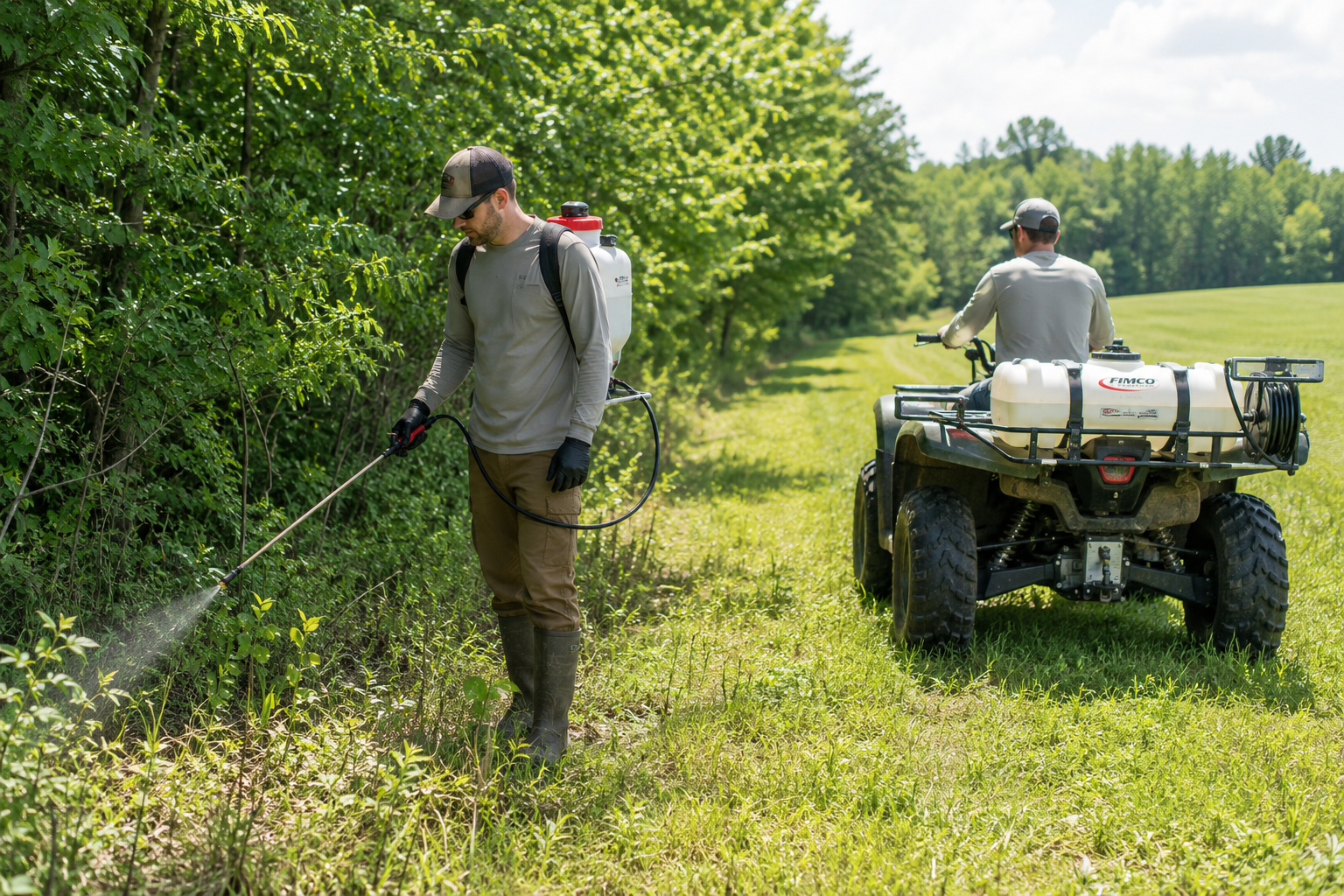
Walk down any agricultural supply aisle, or scroll through an online store, and the sheer number of herbicide options can feel overwhelming. Selective or non-selective? Pre-emergent or post-emergent? Liquid or granular?
The right choice depends entirely on your situation: the type of weeds you’re fighting, the crops or turf you’re protecting, and the timing of your application.
This guide walks you through the major herbicide categories so you can make an informed, confident decision.
What Do Herbicides Do?
Herbicides are chemical compounds specifically formulated to control or eliminate unwanted plant growth, which most of us simply call weeds. They work by disrupting essential biological processes in target plants, such as photosynthesis, cell division, or amino acid synthesis, ultimately causing the plant to die. According to the EPA, herbicides are among the most widely used pesticides in the United States, applied across agriculture, turf management, forestry, and aquatic environments.
Herbicides can be selective, designed to kill only certain plant families while leaving others unharmed, or non-selective, meaning they will damage or kill most plants they contact. Beyond selectivity, the single most important distinction you need to understand is when an herbicide is applied relative to the weed’s life cycle: before it emerges, or after.
What is a Pre-Emergent Herbicide?
A pre-emergent herbicide is applied to the soil before weed seeds germinate. Rather than killing visible weeds, pre-emergents create a chemical barrier in the top layer of soil that disrupts root and shoot development as seeds sprout, preventing seedlings from ever establishing. For this reason, timing is everything; an application that misses the germination window offers little protection.
Pre-emergents are ideal for seasonal weed prevention in lawns, turf, row crops, and bare-ground areas. They work best when soil temperatures are consistently reaching the threshold at which target weed species begin to germinate, typically around 50–55°F for many common broadleaf and grassy weeds.
The Best Pre-Emergent Herbicides


Keystone Pest Solutions carries a full lineup of trusted pre-emergent herbicides for agricultural and herbicides for turf & ornamental (T&O) use cases:
AG Products:
- Prowl H2O: Pendimethalin
- Dual Magnum: S-Metolachlor
- Simazine 4L: Broad-Spectrum
T&O Products:
- Pendulum AquaCap: Pendimethalin
- Prodiamine 4L: Long Residual
Prowl H2O and Dual Magnum are workhorses in row-crop production, offering reliable control of annual grasses and small-seeded broadleaf weeds. Simazine 4L provides broad-spectrum control and is valued for its extended residual activity. On the turf and ornamental side, Pendulum AquaCap and Prodiamine 4L are popular choices among lawn care professionals for their long-lasting barrier effect and low risk of phytotoxicity to established turfgrass.
What is a Post-Emergent Herbicide?
Post-emergent herbicides are applied after weeds have already broken through the soil surface. These products are your best tool when a pre-emergent window has passed, when a weed flush catches you off-guard, or when you’re managing established perennial weeds that a pre-emergent simply cannot address. Post-emergents can be contact-based (killing only the tissue they touch) or systemic (absorbed and translocated throughout the plant to kill roots and all).
The Best Post-Emergent Herbicides
The right post-emergent depends heavily on the target environment. Here’s a breakdown of standout products by use category:


Vegetation Management & Bare Ground:
For utility corridors, fence lines, gravel areas, and industrial sites where no vegetation is desired, Triclopyr 4 is a go-to for woody brush and broadleaf control, while Imazapyr 4SL delivers exceptional bare-ground control with extended soil residual activity.
- Triclopyr 4: Vegetation Management · Woody Brush
- Imazapyr 4SL: Bare Ground · Long Residual


Agricultural Applications:
Octivio is a standout choice for food plot applications, delivering effective broadleaf weed control without harming the surrounding forage or wildlife habitat. Clethodim 2E is a selective grass killer widely used in broadleaf crops, and Sandea/Permit (halosulfuron) is the go-to for tough sedge control in crops where nutsedge has become a persistent problem.
- Octivio: AG · Food Plots
- Clethodim 2E: AG · Grass Control
- Sandea / Permit: AG · Sedge Control


Turf & Ornamental:
For professional lawn care and landscape maintenance, Triad Select and Quintessential offer reliable three-way broadleaf weed control that’s safe on most established cool- and warm-season turfgrasses, targeting dandelions, clover, spurge, and dozens of other common lawn weeds.
- Triad Select: T&O · Three-Way Broadleaf
- Quintessential: T&O · Broadleaf Control
What is the Best Herbicide for Weeds?
When the goal is broad, non-selective weed elimination, clearing overgrown areas, killing weeds in cracks, or preparing a site for planting, glyphosate remains the most trusted active ingredient worldwide. Products in this class, including the widely recognized Roundup brand and its professional-grade equivalents, work systemically to move from leaf tissue down to the root, killing the entire plant.
Explore glyphosate and Roundup formulations, from economical generic concentrates to specialty surfactant-enhanced blends, suitable for homeowners, landscapers, and large-scale applicators.
What is the Best Herbicide for Lawns?
Lawn herbicides require a careful balance: you want to eliminate weeds like dandelions, crabgrass, clover, and nutsedge without damaging the desirable turfgrass around them. Selective post-emergent broadleaf herbicides and targeted pre-emergents are the foundation of any effective lawn weed management program. The best choice will depend on your grass type (warm-season vs. cool-season), the specific weeds present, and the time of year.
Browse herbicides for lawns for a curated selection of lawn-safe products, including selective broadleaf killers, crabgrass preventers, and combination products for both professional and residential use.
What is the Best Herbicide for Crops?
Agricultural weed control is a science unto itself. Crop herbicides must contend with label restrictions, resistance management, crop injury risk, pre-harvest intervals, and the economics of yield protection. Whether you’re managing corn, soybeans, hay fields, food plots, or specialty crops, selecting the right herbicide and rotating chemistries to prevent resistance is critical to long-term success.
Our agricultural herbicides consist of selective grass killers, broadleaf controls, pre-emergent soil treatments, and sedge management products for a wide range of crop systems.
What is the Best Aquatic Herbicide?
Managing aquatic weeds, whether in ponds, lakes, irrigation ditches, or wetlands, requires herbicides that are specifically registered for use in or near water. Standard terrestrial herbicides can be toxic to aquatic life and are not legal for aquatic use. Aquatic herbicides are formulated to control invasive and nuisance aquatic plants like hydrilla, watermeal, duckweed, cattails, and algae, with minimal impact on fish and other aquatic organisms when applied correctly.
EPA-registered aquatic herbicides are provided for submerged, emergent, and floating aquatic weed control, safe, effective, and compliant for water-adjacent applications.
How Long Do Herbicides Take to Work?

One of the most common questions we hear: “I sprayed yesterday, why do the weeds still look fine?”
Herbicide speed depends on the active ingredient, the formulation type, weather conditions, and the size and health of the target weed. Contact herbicides may show visible results within 24–48 hours, while systemic herbicides that must travel through plant tissue to the roots can take 7–21 days to show complete activity. Always read the product label for expected activity timelines, and avoid mowing or watering shortly after application, as this can dilute or remove the product before it’s fully absorbed.
When to Apply Herbicide to Lawn
For pre-emergent lawn herbicides, timing your application to soil temperature is critical; most should go down when soil temperatures at a 2-inch depth reach 50–55°F, before crabgrass and other annual weeds begin to germinate.
For post-emergent lawn herbicides, apply when weeds are actively growing, temperatures are between 60°F and 85°F, no rain is forecast for 24–48 hours, and wind speeds are calm. Early morning applications are generally ideal to reduce volatilization and drift.
How Long Do Herbicides Stay in the Soil?
Soil persistence varies widely. Contact herbicides like glyphosate break down relatively quickly, often within days to a few weeks under warm, moist conditions. Pre-emergent herbicides are engineered for longer residual activity, with products like Prodiamine and Pendimethalin remaining active in the soil for 3–6 months. Imazapyr can persist for considerably longer, which is why it’s reserved for bare-ground and non-crop use. Always review the product label’s re-cropping and planting intervals before establishing new plants in a treated area.
Choosing the best herbicide isn’t about finding a universal answer; it’s about matching the right chemistry to your specific situation. Pre-emergents and post-emergents each have their place, and the best results almost always come from a thoughtful, integrated approach that considers timing, target species, and the environment you’re protecting.
Whether you’re a homeowner fighting a crabgrass invasion, a farmer managing resistant weeds in a soybean field, or a property manager maintaining a clean shoreline, Keystone Pest Solutions has the products, the knowledge, and the competitive pricing to help you win the battle. Consider our full herbicide catalog today, and if you’re ever unsure, our team is here to help you find exactly what you need.